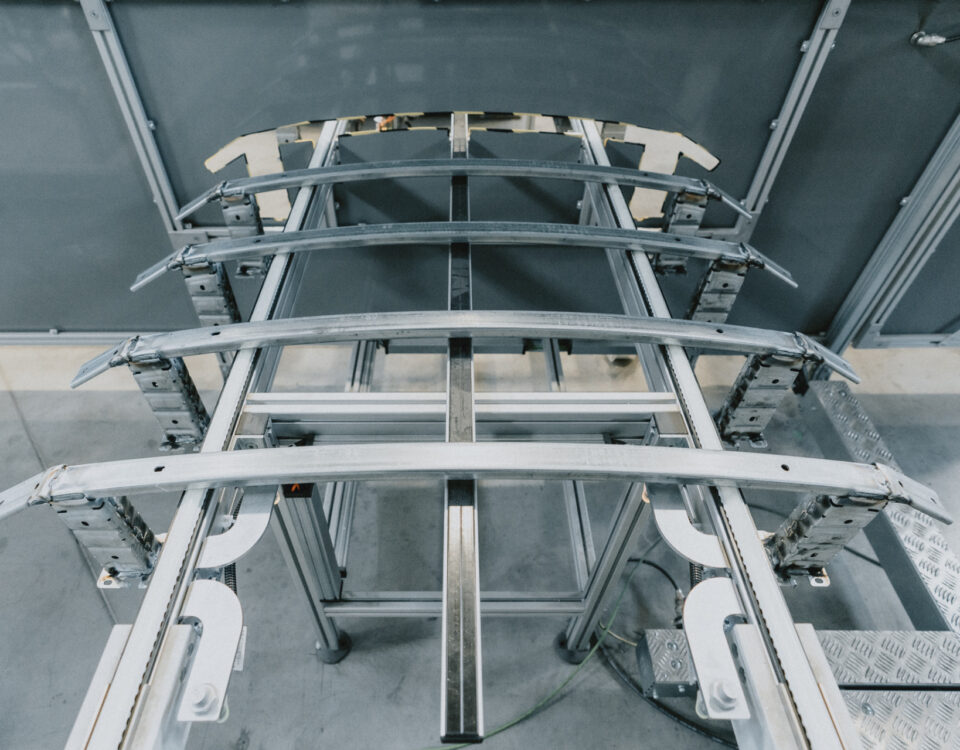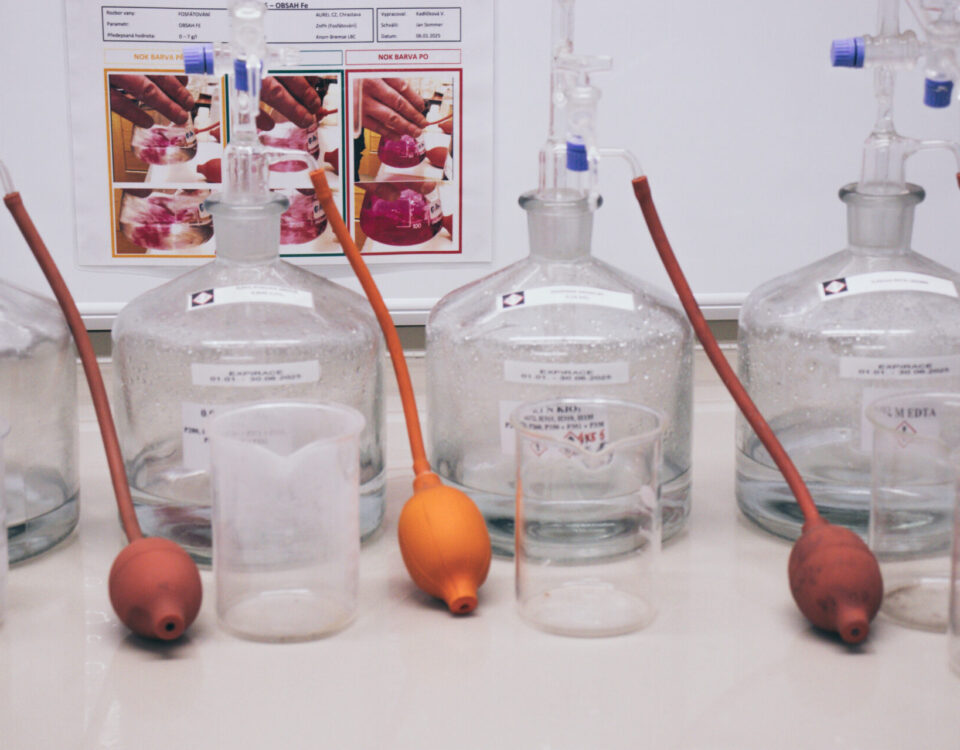

Electromobility is fundamentally transforming vehicle design as well as the requirements placed on individual components. Alongside the optimisation of weight, safety, and efficiency, corrosion protection of chassis parts is becoming increasingly important. Today, corrosion is not only a matter of durability or aesthetics, but above all a critical safety factor that must comply with ever stricter OEM standards.
Increased weight and thermal stress as key challenges
Electric vehicles introduce specific operating conditions that increase the demands on chassis component durability. The higher vehicle weight, mainly due to battery systems, results in greater mechanical stress on the structure. At the same time, different thermal loads come into play – for example, due to repeated charging cycles and fluctuations in operating temperatures. These factors accelerate the degradation of protective layers and increase the risk of corrosion, particularly in critical areas.
Battery trays as a critical structural component
Among the most heavily stressed parts of modern EV platforms are battery trays. They carry significant battery weight while also meeting strict safety and sealing requirements. In designs combining steel and aluminium, the risk of galvanic corrosion increases at contact points. Surface protection must therefore be designed to reliably protect even complex geometries and critical joints, where corrosion most often initiates. The stability of protective coatings under repeated thermal cycling also plays a crucial role.
Stricter OEM standards and testing
Core technologies such as cathodic electrocoating (e-coating), multi-layer coating systems, and powder coating remain standard in electric vehicles. However, EVs are raising the bar for both their quality and application. OEM manufacturers are setting stricter validation criteria and expanding the scope of testing.
Increased attention is being paid to protecting critical areas of the structure – such as welds, edges, and joints – where corrosion often begins. More demanding cyclic corrosion tests are also required, simulating long-term exposure to moisture, salt solutions, and mechanical stress. At Automotive Painting Partners, we use salt spray corrosion testing to accelerate verification of protective system resistance under aggressive conditions.
The Automotive Painting Partners approach
At Automotive Painting Partners, we approach corrosion protection in electric vehicles with a strong focus on technological complexity and the specific requirements of EV platforms. The combination of different materials – typically steel and aluminium – increases processing complexity and places higher demands on both the selection and application of surface treatments, particularly given the growing share of aluminium components.
These factors are reflected in both the design and implementation of processes from the early stages of component development. We consider not only mechanical properties, but also the effective application of protective layers, including coverage of complex geometries and critical areas. This is followed by selecting suitable combinations of technologies – such as cathodic dip coating and functional coating systems – and ensuring proper layering. The result is a comprehensive and long-term stable protective system that meets the requirements of modern EV platforms and OEM manufacturers.
“When applying surface treatments to EV components, our goal is to achieve a level of quality that is fully functional while also being technologically and process stable. The more information customers provide at the very beginning during the inquiry phase, the more effectively we can support subsequent processes,” explains in an interview Jan Kysela, Head of Quality at Automotive Painting Partners.
A comprehensive approach as the future standard
With the growing importance of electromobility, the significance of corrosion protection for chassis components will continue to increase. The key to success lies in integrating design, advanced surface treatments, and rigorous testing in line with the strictest OEM standards. This comprehensive approach will ultimately determine the long-term reliability and safety of electric vehicles.
Want to ensure the highest level of corrosion protection for EV components?
Consult with us early in the development phase to identify the most suitable solution. We will ensure that your surface treatments meet the most demanding OEM requirements.