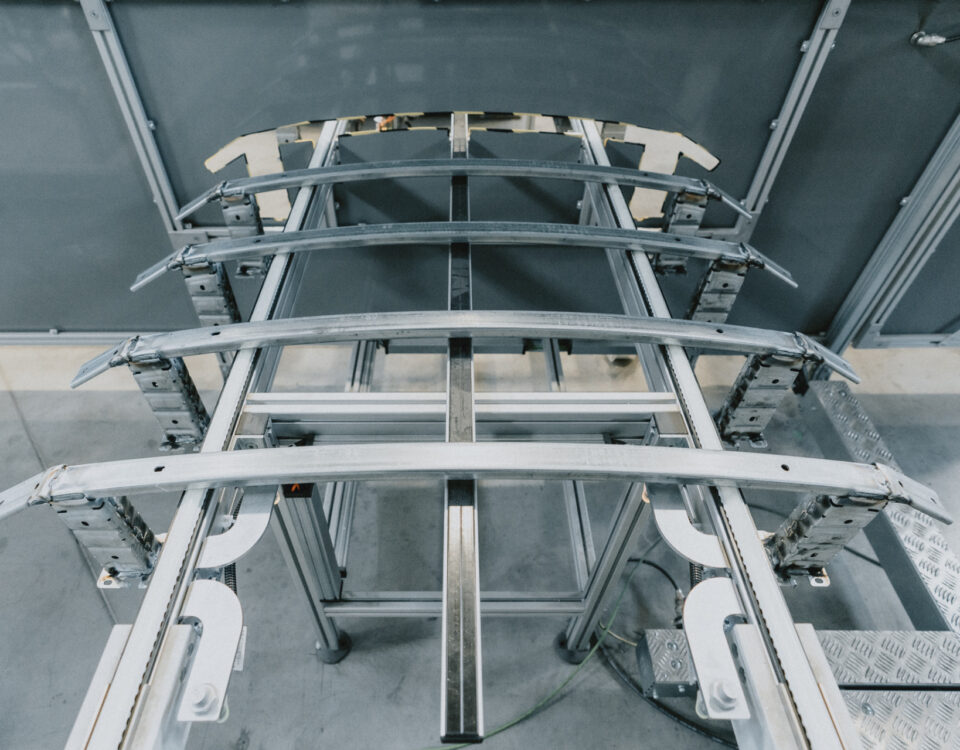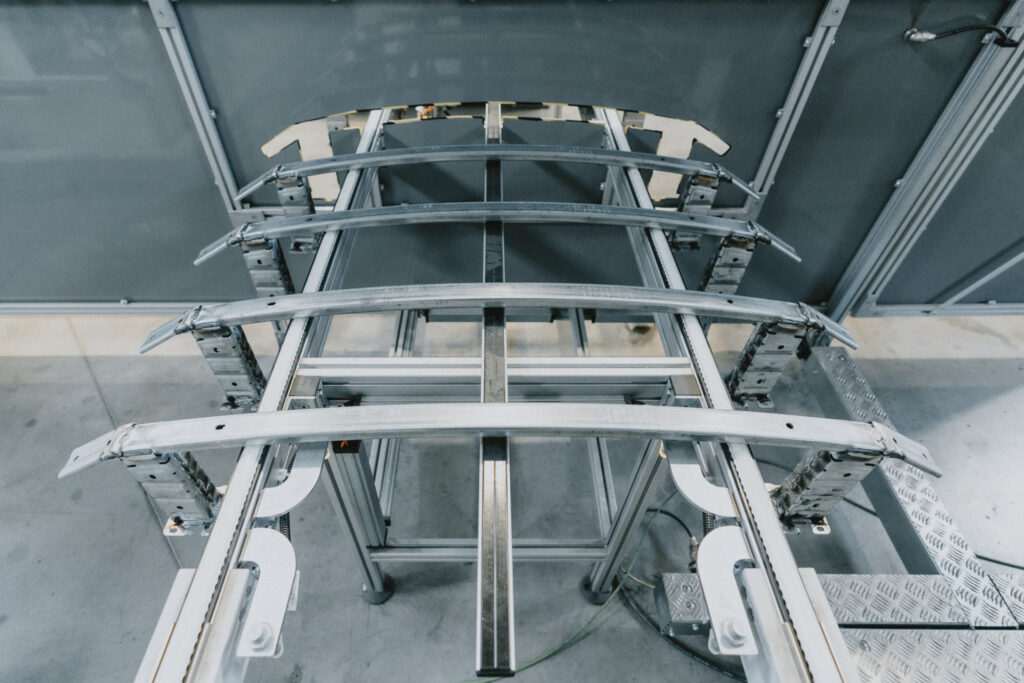
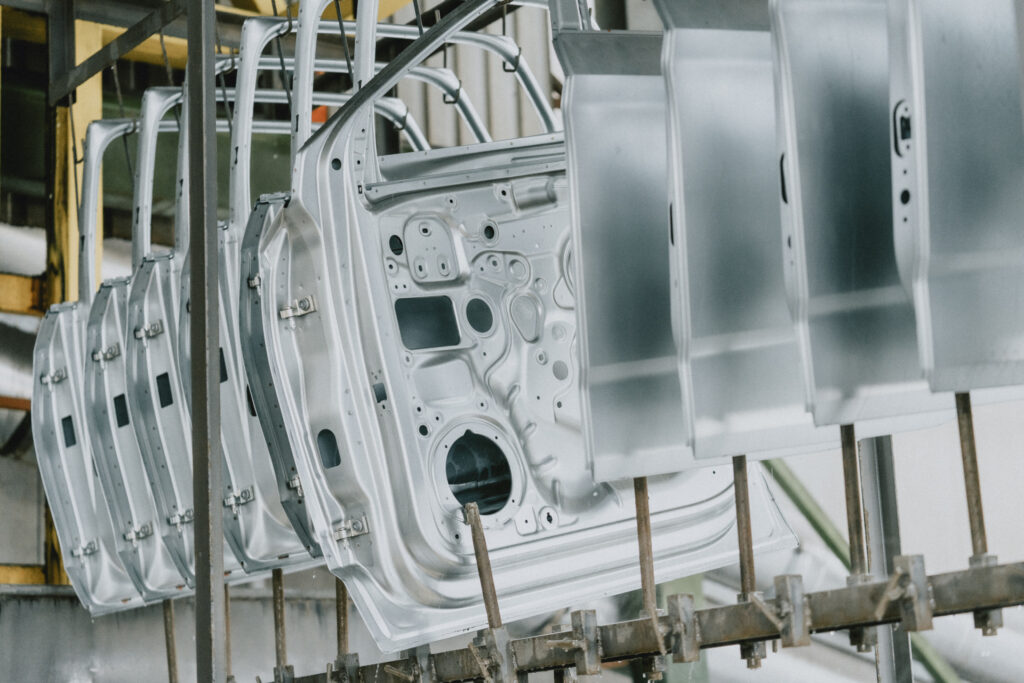
Surface protection of metal components is a critical factor in the automotive industry, directly influencing durability, quality, and production efficiency. While hot-dip galvanising is primarily used for heavy steel structures, cathodic dip coating (KTL) dominates applications that require precision, clean threads, and protection of internal cavities. Each technology has its own specific properties and optimal use cases.
Galvanising in modern automotive: Reaching its limits
Hot-dip galvanising is a proven technology widely used where long-term resistance in demanding environments is a priority. The principle is simple: a steel component is immersed in molten zinc, forming a thick protective layer made of iron-zinc alloy. The main advantage lies in the coating thickness – typically ranging from tens to hundreds of micrometres. This provides excellent mechanical resistance and long-term corrosion protection, especially in exterior conditions.
However, this thickness also introduces limitations that are critical in automotive applications. A thicker and less uniform layer can negatively affect tight tolerances, threads, and mating surfaces. For smaller or more complex parts, additional post-processing is often required, increasing both costs and production time. This is where galvanising begins to fall short of modern automotive requirements.
KTL: Uniform protection even in hard-to-reach areas
Cathodic dip coating (KTL) is a technology that has seen significant development within the automotive sector. It is an electrochemical process in which the coating is evenly deposited across the entire surface of a component – including cavities, edges, and hard-to-reach areas. The resulting coating is significantly thinner (typically 15–35 µm), yet highly uniform and precisely controlled. This allows threads to remain functional, ensures accurate fits, and maintains dimensional stability without the need for additional processing.
From a technical perspective, KTL is particularly suitable for:
- parts with complex geometries,
- components with internal cavities,
- functional assemblies requiring tight tolerances,
- high-volume production with a focus on repeatability
Typical applications include body reinforcements, brackets, mounts, and bolted connections – where both surface coverage and functional integrity are essential.
At Automotive Painting Partners, we have specialised in cathodic dip coating for over 20 years. Through optimised process parameters and a strong focus on quality control, we tailor the coating process to meet the specific needs of both development and production teams.
KTL also makes economic sense
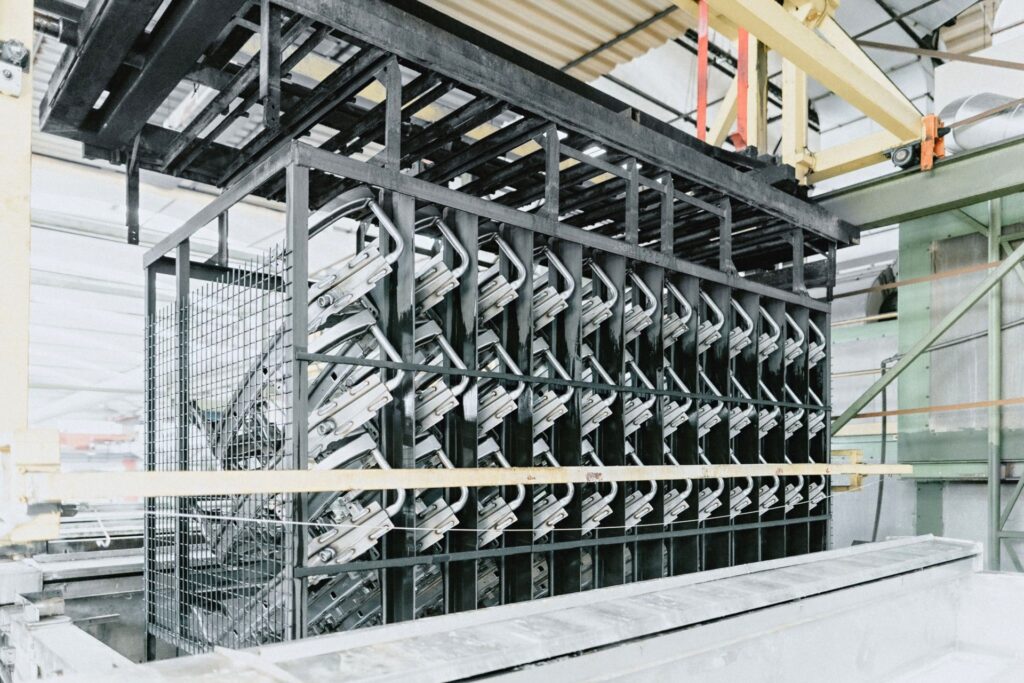
Beyond technical performance, economic considerations are becoming increasingly important in decision-making – and this is where KTL often has a clear advantage. A thinner coating means lower material consumption. The uniform process eliminates the need for additional finishing operations, while a high level of automation ensures consistent quality across production batches. The result is a more efficient manufacturing process with fewer defects and lower operating costs.
There is no “better” technology. Only the right choice
Both galvanising and cathodic dip coating have a well-established place in industrial applications. While galvanising remains the ideal solution for heavy-duty structures exposed to extreme conditions, KTL better aligns with modern automotive demands: precision, repeatability, and efficiency. The decision should not be based on general comparison, but on the specific application. The ability to correctly evaluate component requirements and select the appropriate technology is key – whether during the development phase or when optimising serial production.
Not sure which technology is right for your part? Get in touch with us – we’ll help you choose a solution that makes sense both technically and economically.